How It’s Made.
Everything on this page is freeEvery frame of the series is AI-generated. No camera, no actors — one person. This is the whole process, shown on one real shot from EP_002.
Four steps.
The whole process at a glance.
The shot starts as a written prompt — what happens, second by second, and how it should look and sound.
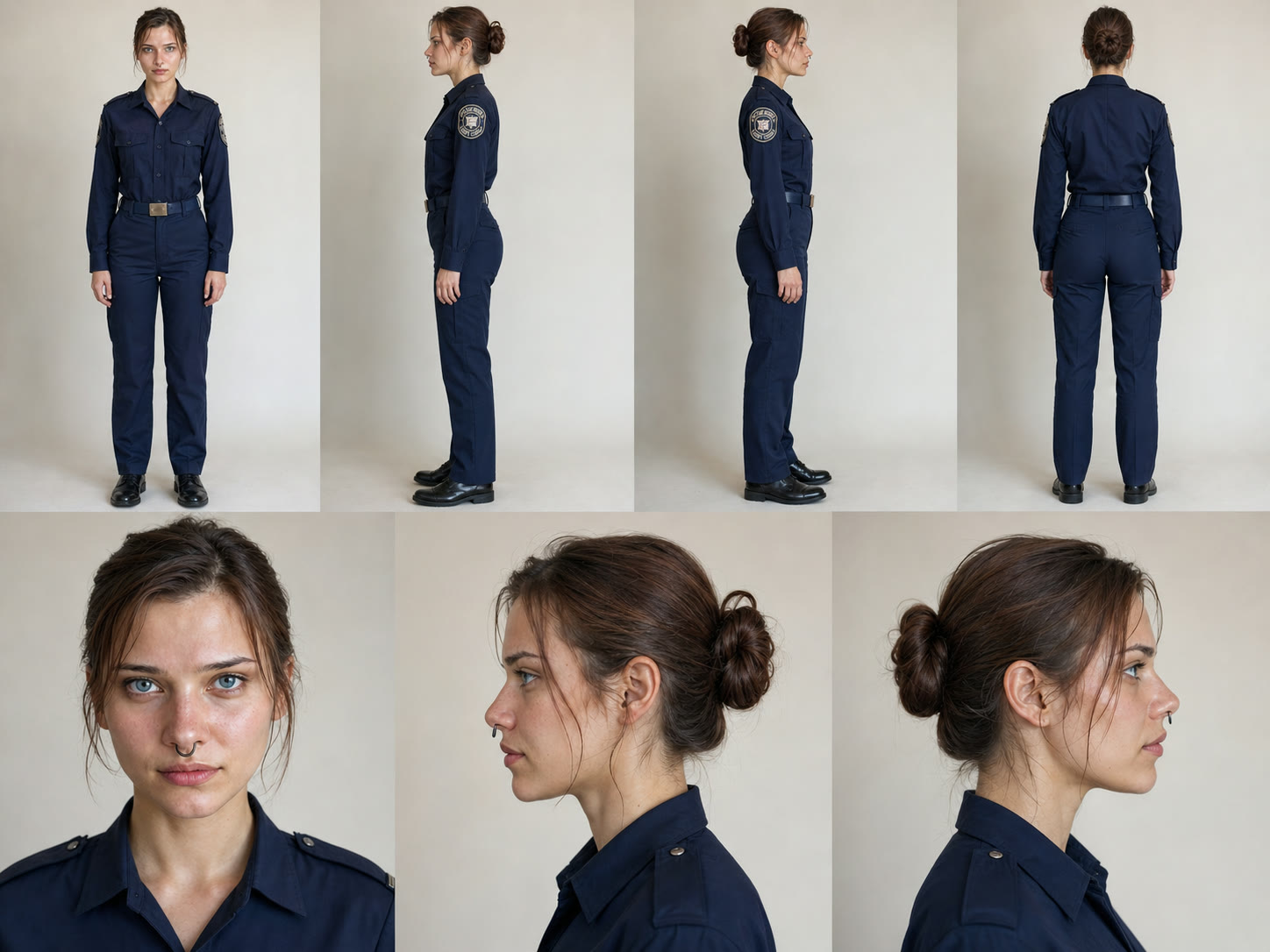
Reference pictures are generated first: the character's face, the set, the props.
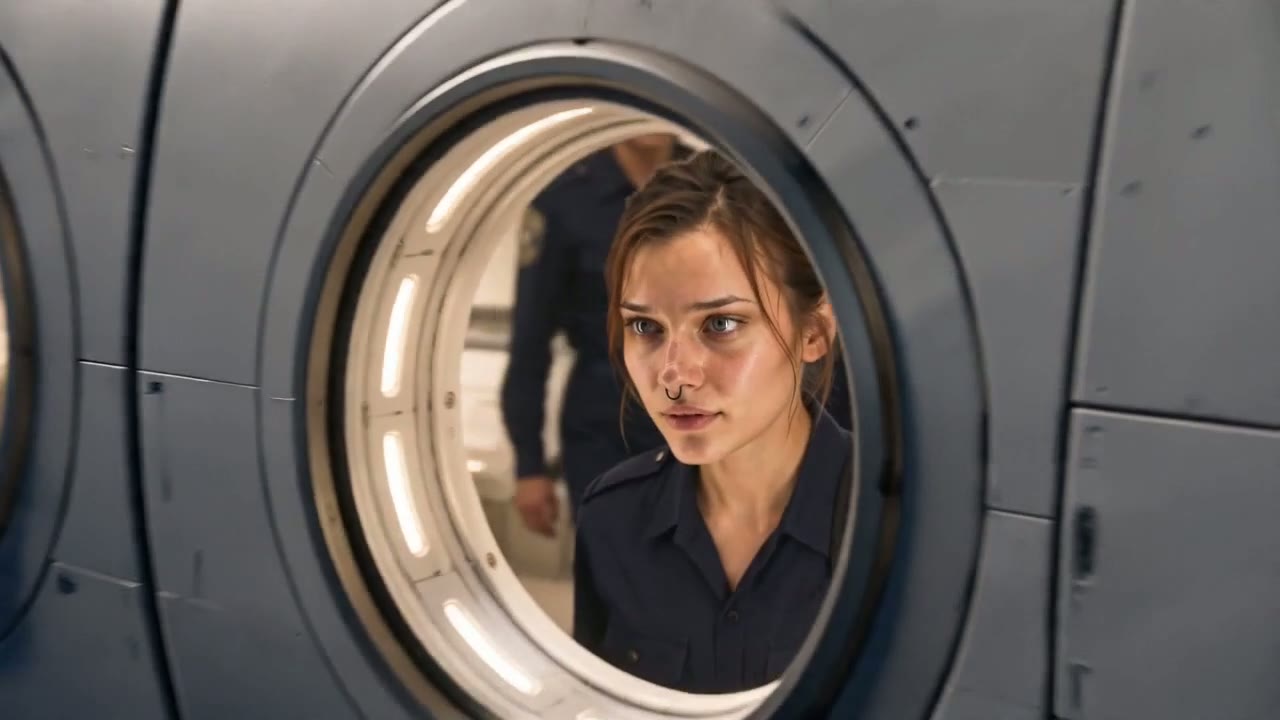
Pictures and prompt go into Runway, running the Seedance 2.0 model. Out comes a 10–15 second video, with sound.
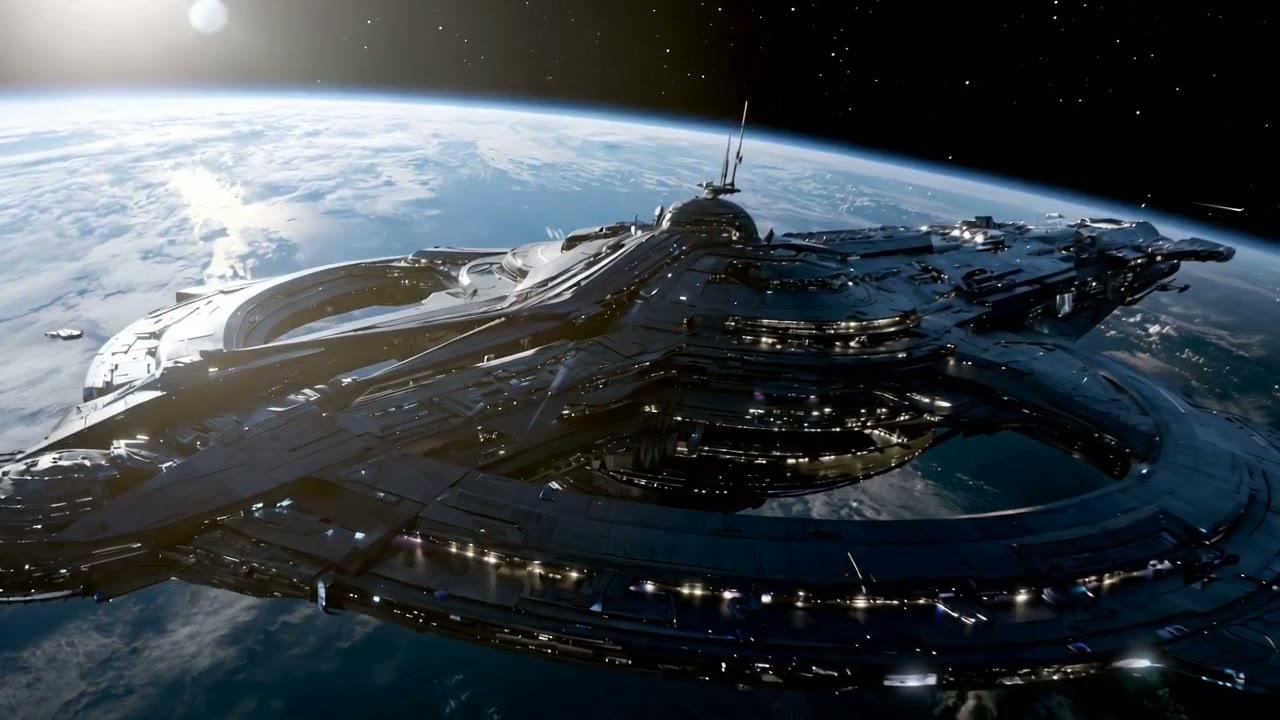
Cut in Premiere, scored with ElevenLabs, upscaled 4× with Topaz. Then it's television.
So: image-to-video, plus text — the pictures lock how everything looks, the prompt directs what happens.
Written before it exists.
What a prompt says, in what order.
No storyboard — a shot is one page of text, hard ceiling 3,500 characters. It always reads in the same order, eight parts:
The pictures the model loads — @image1, @image2, and so on.
The shot in one breath.
What happens, second by second.
The one move the camera makes.
What kind of image it is.
Where the light comes from.
What you hear — the model does sound too.
What the shot must never do.
The real final prompt — a fifteen-second unbroken pull-back from Olivia's porthole to the full Pathfinder. Verbatim, yours to copy:
References:
@image1 = Olivia (22, septum ring, hair pulled back) in pre-launch travel-issue per CHAR ref — her face through a round porthole, lit warm from inside
@image2 = composite junction plate (the LAYOUT) — the gangway from outside, the liaison shuttle on its LEFT end, the gargantuan Pathfinder's hull on its RIGHT end, round portholes, Olivia small behind one
@image3 = the liaison shuttle — substantial multi-deck crew ship, broad streamlined primary hull, twin raised dorsal pods, heavy working-ship plating (the full ship that grows in on the left)
@image4 = the gargantuan Pathfinder — the WHOLE colossal city-scale ring-hull starship, running lights, deep structure (fills the frame at the END)

Subject: HERO — the FULL scale reveal through Olivia, ONE continuous shot. Open tight on her face in a gangway porthole, then pull back FAST and never stop: the small shuttle comes fully into frame on the LEFT first, then the camera keeps going until the ENTIRE gargantuan Pathfinder fills the frame and the shuttle + gangway are a barely-visible speck. No cut; never crosses the glass.

0–3s: tight on Olivia's face through the round gangway porthole, seen from OUTSIDE in space, lit warm from inside; she looks out; the camera starts pulling back fast; deep-space black around the glass.
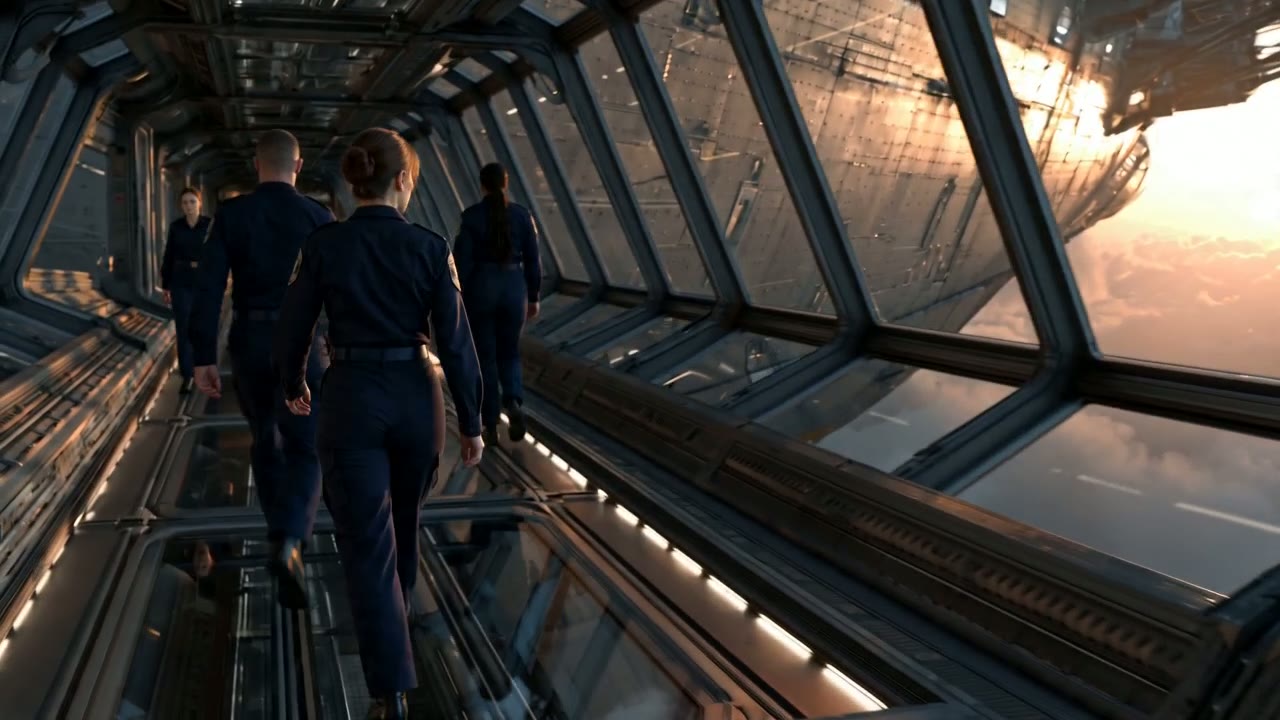
3–7s: the porthole becomes one of a row along the gangway (cadets moving past behind the glass); to the LEFT the small docked liaison shuttle comes FULLY into frame first (broad hull, twin raised dorsal pods); the Pathfinder's hull begins to loom huge on the RIGHT.
7–11s: the camera keeps retreating; the shuttle and gangway shrink toward the lower-left as more and more of the colossal Pathfinder sweeps in, its ring-hull and running lights resolving city-scale.
11–15s: the pull completes — the ENTIRE gargantuan Pathfinder fills the frame edge-to-edge; the shuttle, gangway and Olivia's window now a tiny speck on it; the sub-bass scale swell lands; hold; cut.

Camera: ONE continuous fast/accelerating pull-back from the tight porthole ALL THE WAY OUT to the whole Pathfinder filling the frame — a single unbroken dolly-out, never stopping at an intermediate wide, never crossing the glass.
Style: photoreal cinematic sci-fi, Interstellar / Star-Trek awe-scale, sleek high-tech Star Trek plating-and-greebles realism (advanced, lived-in, photoreal); the scale lands through the human in the window.
Lighting: warm interior glow in the porthole at the open; hard sun on the sunward hulls, cool Earth-blue bounce on shadowed faces; running lights across the Pathfinder; deep-space black.
Audio: muffled ship hum and Olivia's soft breath at the open; no dialogue; a deep sub-bass swell building into the full reveal; no music.
Constraints: ONE single unbroken pull-back — NO cut, cross-dissolve, transition, or jump; the Pathfinder grows ONLY because the camera physically retreats, not by a scene change; do NOT stop at an intermediate framing — continue ALL THE WAY OUT until the ENTIRE Pathfinder fills the frame and the shuttle + gangway are a barely-visible speck; pass smoothly through the midpoint (shuttle small lower-left, Pathfinder hull filling the rest); never cross the glass, no through-window morph; LAYOUT per @image2 — shuttle (@image3) LEFT, Pathfinder (@image4) RIGHT, don't swap or blend; the shuttle stays a SUBSTANTIAL multi-deck vessel, NOT a 4-person shuttle; consistent face on Olivia; realistic scale + lighting, no warped geometry, no text/logos; Audio On.
References:
@image1 = Olivia (22, septum ring, hair pulled back) in pre-launch travel-issue per CHAR ref — her face through a round porthole, lit warm from inside
@image2 = composite junction plate (the LAYOUT) — the gangway from outside, the liaison shuttle on its LEFT end, the gargantuan Pathfinder's hull on its RIGHT end, round portholes, Olivia small behind one
@image3 = the liaison shuttle — substantial multi-deck crew ship, broad streamlined primary hull, twin raised dorsal pods, heavy working-ship plating (the full ship that grows in on the left)
@image4 = the gargantuan Pathfinder — the WHOLE colossal city-scale ring-hull starship, running lights, deep structure (fills the frame at the END)
Subject: HERO — the FULL scale reveal through Olivia, ONE continuous shot. Open tight on her face in a gangway porthole, then pull back FAST and never stop: the small shuttle comes fully into frame on the LEFT first, then the camera keeps going until the ENTIRE gargantuan Pathfinder fills the frame and the shuttle + gangway are a barely-visible speck. No cut; never crosses the glass.
0–3s: tight on Olivia's face through the round gangway porthole, seen from OUTSIDE in space, lit warm from inside; she looks out; the camera starts pulling back fast; deep-space black around the glass.
3–7s: the porthole becomes one of a row along the gangway (cadets moving past behind the glass); to the LEFT the small docked liaison shuttle comes FULLY into frame first (broad hull, twin raised dorsal pods); the Pathfinder's hull begins to loom huge on the RIGHT.
7–11s: the camera keeps retreating; the shuttle and gangway shrink toward the lower-left as more and more of the colossal Pathfinder sweeps in, its ring-hull and running lights resolving city-scale.
11–15s: the pull completes — the ENTIRE gargantuan Pathfinder fills the frame edge-to-edge; the shuttle, gangway and Olivia's window now a tiny speck on it; the sub-bass scale swell lands; hold; cut.
Camera: ONE continuous fast/accelerating pull-back from the tight porthole ALL THE WAY OUT to the whole Pathfinder filling the frame — a single unbroken dolly-out, never stopping at an intermediate wide, never crossing the glass.
Style: photoreal cinematic sci-fi, Interstellar / Star-Trek awe-scale, sleek high-tech Star Trek plating-and-greebles realism (advanced, lived-in, photoreal); the scale lands through the human in the window.
Lighting: warm interior glow in the porthole at the open; hard sun on the sunward hulls, cool Earth-blue bounce on shadowed faces; running lights across the Pathfinder; deep-space black.
Audio: muffled ship hum and Olivia's soft breath at the open; no dialogue; a deep sub-bass swell building into the full reveal; no music.
Constraints: ONE single unbroken pull-back — NO cut, cross-dissolve, transition, or jump; the Pathfinder grows ONLY because the camera physically retreats, not by a scene change; do NOT stop at an intermediate framing — continue ALL THE WAY OUT until the ENTIRE Pathfinder fills the frame and the shuttle + gangway are a barely-visible speck; pass smoothly through the midpoint (shuttle small lower-left, Pathfinder hull filling the rest); never cross the glass, no through-window morph; LAYOUT per @image2 — shuttle (@image3) LEFT, Pathfinder (@image4) RIGHT, don't swap or blend; the shuttle stays a SUBSTANTIAL multi-deck vessel, NOT a 4-person shuttle; consistent face on Olivia; realistic scale + lighting, no warped geometry, no text/logos; Audio On.
The pictures lock the look.
Why every shot starts with generated pictures.
The model doesn't know Olivia's face and has never seen the Pathfinder — so every shot loads pictures that lock them. Faces and anything that must feel real usually go through ChatGPT; sci-fi sets and props usually go through Midjourney — it's a judgment call per picture. Below: the identity sheet and the shuttle came out of ChatGPT; the Pathfinder plate came out of Midjourney.
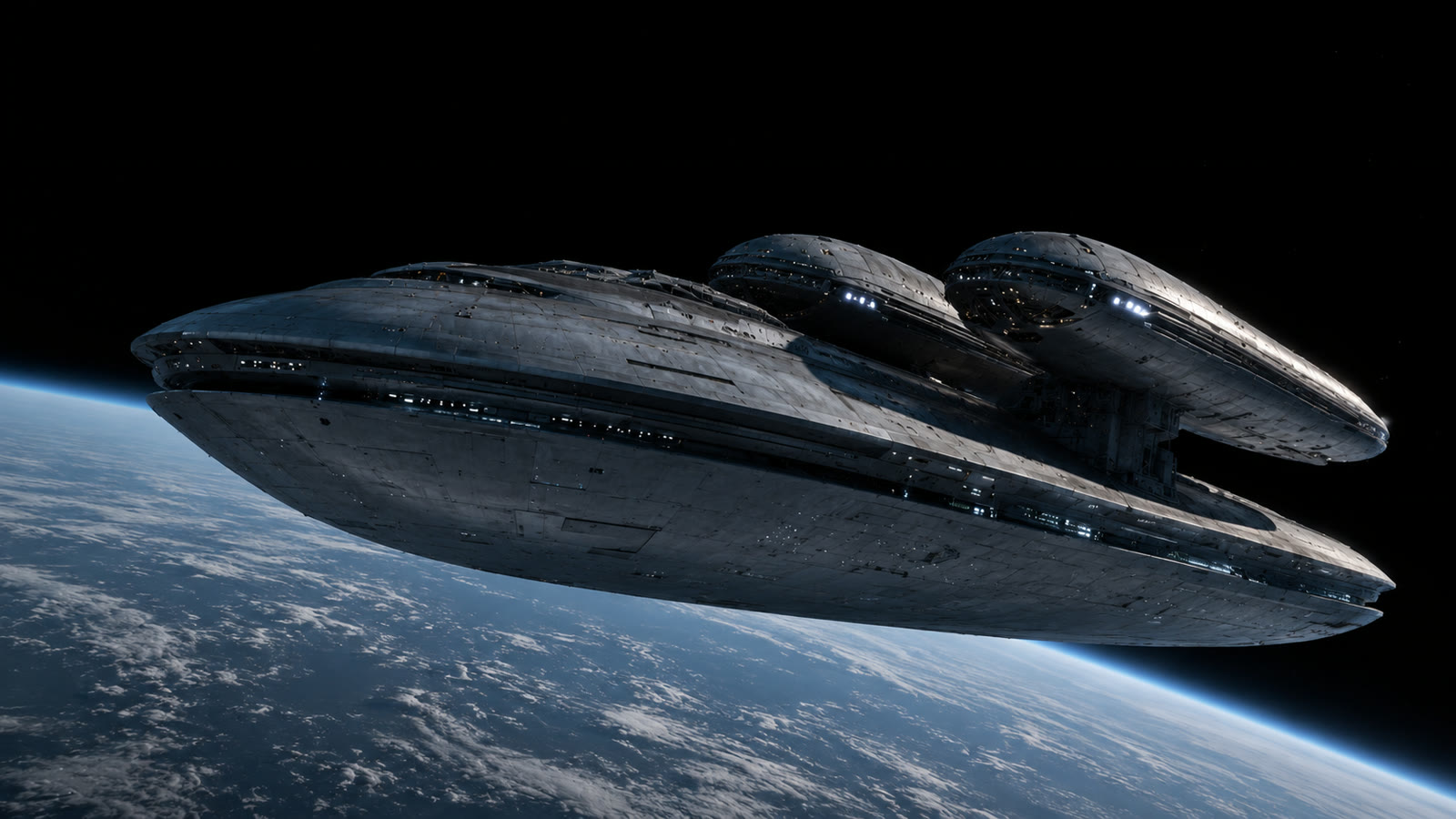
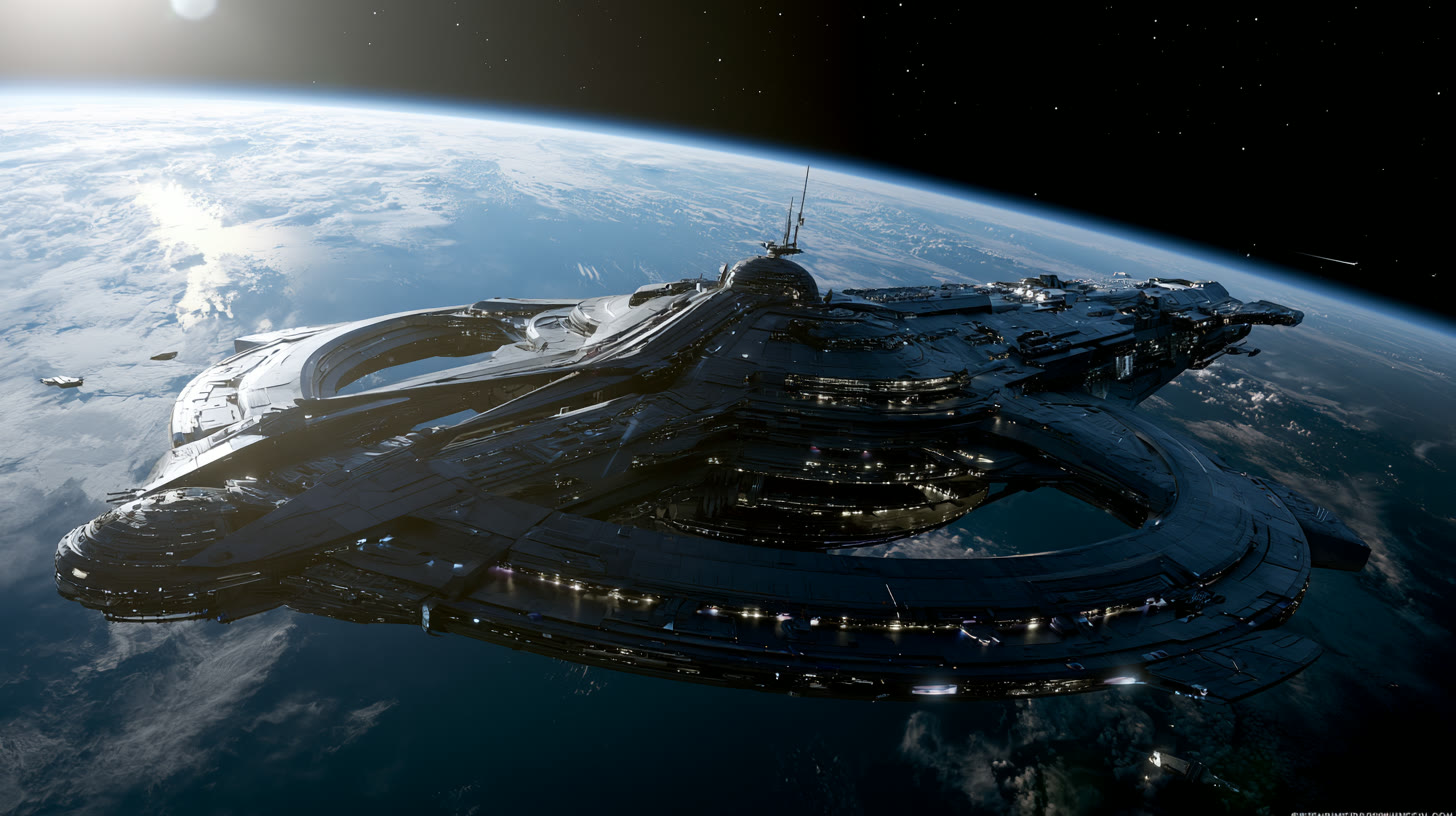
Each picture starts as a paragraph. The real one behind the shuttle plate — an image-to-image prompt: a picture of the ship is attached, and the words change only its setting:
[Reference image attached] = the liaison shuttle hull — a near-future 2098 crew ship (the SAME vessel shown in the attached image; the craft that lifts off from Earth in this episode).

[Relationship instruction] Using the attached image as the strict design reference, reproduce this EXACT ship — same silhouette, same broad streamlined primary hull with the twin raised dorsal pods, same proportions, same surface plating and greebles, same sleek high-tech Star Trek working-ship register (advanced, lived-in, photoreal). IDENTITY ONLY: change nothing about the vessel itself; change ONLY its setting and the lighting.

[New scenario / setting]
- Place the ship clean in low Earth orbit: deep-space black around it, Earth's curved blue limb and a thin bright atmospheric band behind and below it, hard direct sunlight from one side, cool Earth-blue bounce across the shadowed faces.
- No launch pad, no gantries, no ground, no other craft in frame.
- It must read as a single self-contained vessel against space — this is the SMALL liaison shuttle; do NOT turn it into a ring-shaped or city-scale station.

[Composition] Three-quarter exterior hero angle of the whole ship against space, the full silhouette clearly readable; standard lens, cinematic, eye-level-equivalent.

[Style] Photorealistic cinematic sci-fi, sleek high-tech Star Trek register (advanced, lived-in, photoreal), highly futuristic but photoreal and believable (not gaudy), no colored panels, no readable text or logos on the hull; suitable for use as a Seedance Omni Reference.
One rule: outfit and hair live in the pictures, never in the prompt text. Describe them in both and the two versions drift apart.
Takes, not reshoots.
Into Runway with Seedance 2.0 — out comes a 10–15 second video with sound.
It's rarely right the first time — fifteen takes are on file for this shot. Three of them, straight out of the machine — from broken to the take that aired:
The gangway isn't connected to either ship — it just floats between them.
Olivia's at the window now, but the pull-out doesn't land.
Connected, and the move lands — the take that aired.
When a take fell short, the fix was a note in plain words to the AI assistant that drafts the prompts — back came a revised prompt for the next run. The two that turned this shot around:
The note · 01 — typed to the machine“The issue with the clips from this prompt is that we never actually see the shuttle dock with the gargantuan starship. We need a docking section that connects the small shuttle from image 2 to the ship.”
The note · 02 — typed to the machine“The problem with these clips is the transfer gangway — it isn't connected to either ship. It wasn't connected at all, actually. The right end should attach to the gargantuan starship from @image4 and the left end to the shuttle from @image3. And as the camera pulls out, the two connected ships should be revealed progressively — the liaison shuttle in full first, since it's far smaller, then more and more of the Pathfinder's hull, until the whole ship is in frame and the shuttle looks tiny beside it. Also, one clip had strange light reflections in her eyes from space — let's avoid unusual reflections in her eyes. Keep the prompt under 3,500 characters.”
The earlier prompt — the shot this used to be
Before the re-stage this was a different shot — a wide of the shuttle nosing into a berth, camera pushing in. The final version inverts it. The original, verbatim:
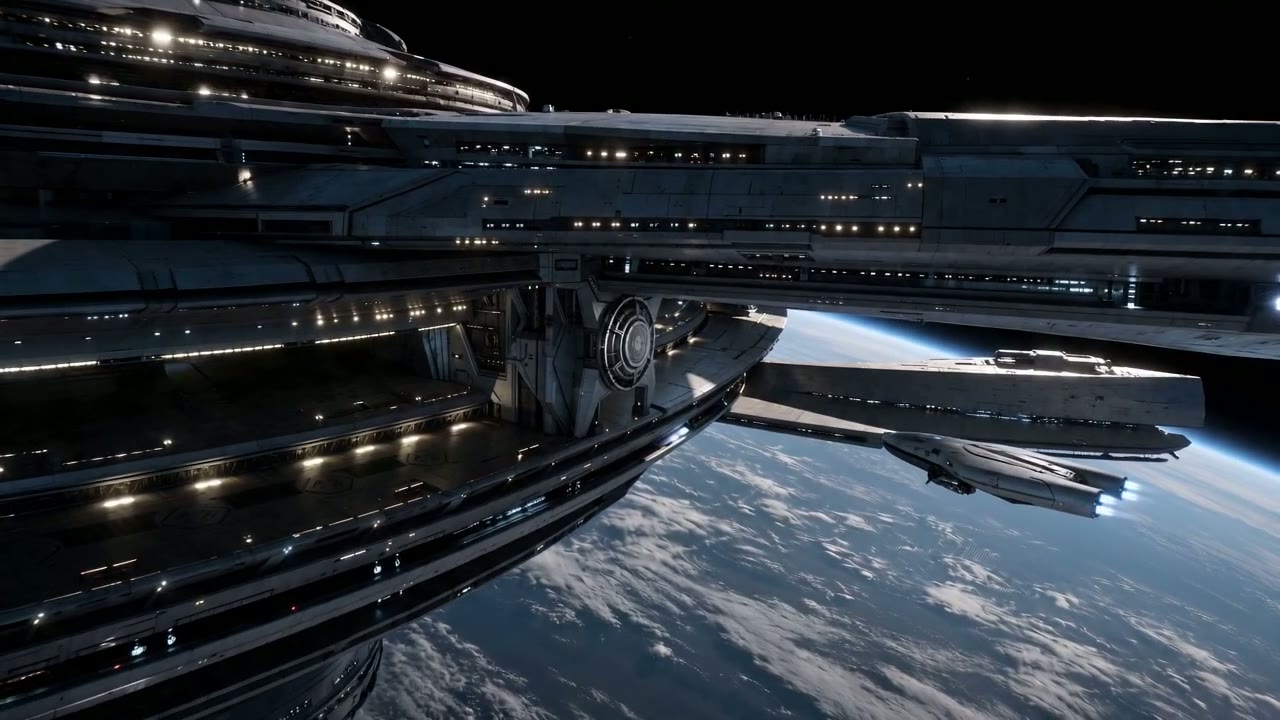
References:
@image1 = the gargantuan Pathfinder in orbit — colossal, city-scale ring-hull starship, running lights, deep structural geometry, Earth large and near beyond, deep-space black, hard sunlight
@image2 = the liaison shuttle clean in low orbit — the small crew shuttle, dwarfed, easing toward a docking berth on the great hull

Subject: HERO — the shuttle eases into a docking berth on the Pathfinder's hull. The thing that looked huge at launch is now a minnow against a city. This is the scale reveal.

0–5s: wide holding both — the Pathfinder's hull fills most of the frame, colossal and city-scale, running lights stretching off past the edges; the shuttle is a tiny craft in the lower / outer frame, lined up on a docking berth, soft maneuvering-thruster puffs adjusting its drift.
5–10s: a slow push as the shuttle noses in toward the berth; the hull stretches past all four frame edges now, the structure vast behind the tiny ship; the size difference is unmistakable — the shuttle a speck against the running lights and plating.
10–15s: the shuttle settles into the berth — a gentle contact, NOT a crash; a muffled metallic clunk and latch read low through the hull; Earth huge and near beyond; hold on the docked shuttle dwarfed against the colossal Pathfinder as the sub-bass swell lands; cut.

Camera: a wide that holds both craft, then a slow push toward the docking point; no whip; the held composition (tiny ship, vast hull) is the point.
Style: photoreal cinematic sci-fi, Interstellar / Star-Trek awe-scale, The Expanse plating-and-greebles realism; immense, finality-adjacent.
Lighting: hard direct sun on the sunward hull, deep shadow elsewhere; thousands of running lights across the Pathfinder; cool Earth-light bounce; the shuttle small and sunlit against the structure; deep-space black.
Audio: vacuum hush; the muffled metallic clunk and latching of the dock heard low through the hull; a deep sub-bass swell landing on the reveal; no dialogue, no music.
Constraints: stage the framing so the size difference is UNMISTAKABLE — the shuttle reads as no more than a few percent of the visible hull; the same shuttle that filled the launch-pad frame in 04b_01 is now a minnow; the dock is a gentle settle, NOT a collision; the two craft read as DIFFERENT vessels at wildly different scales; the Pathfinder matches its established ring silhouette; realistic orbital scale and lighting, no warped geometry; no readable text or logos; clean cinematic.
Take 13 — the keeper. In the edit it got its color grade, a 4× upscale, and its score, then aired.
Then it airs.
Between the last raw take and the episode: three tools.
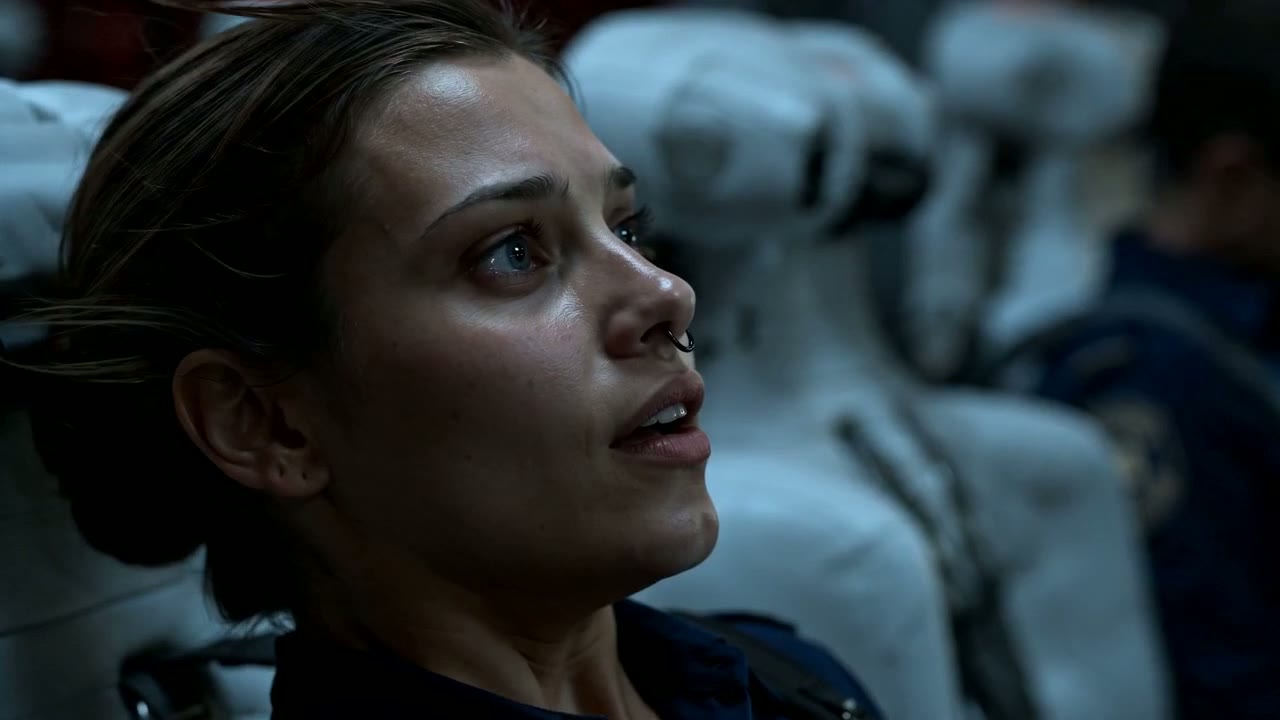
Every take that made it is assembled and timed in Adobe Premiere Pro.
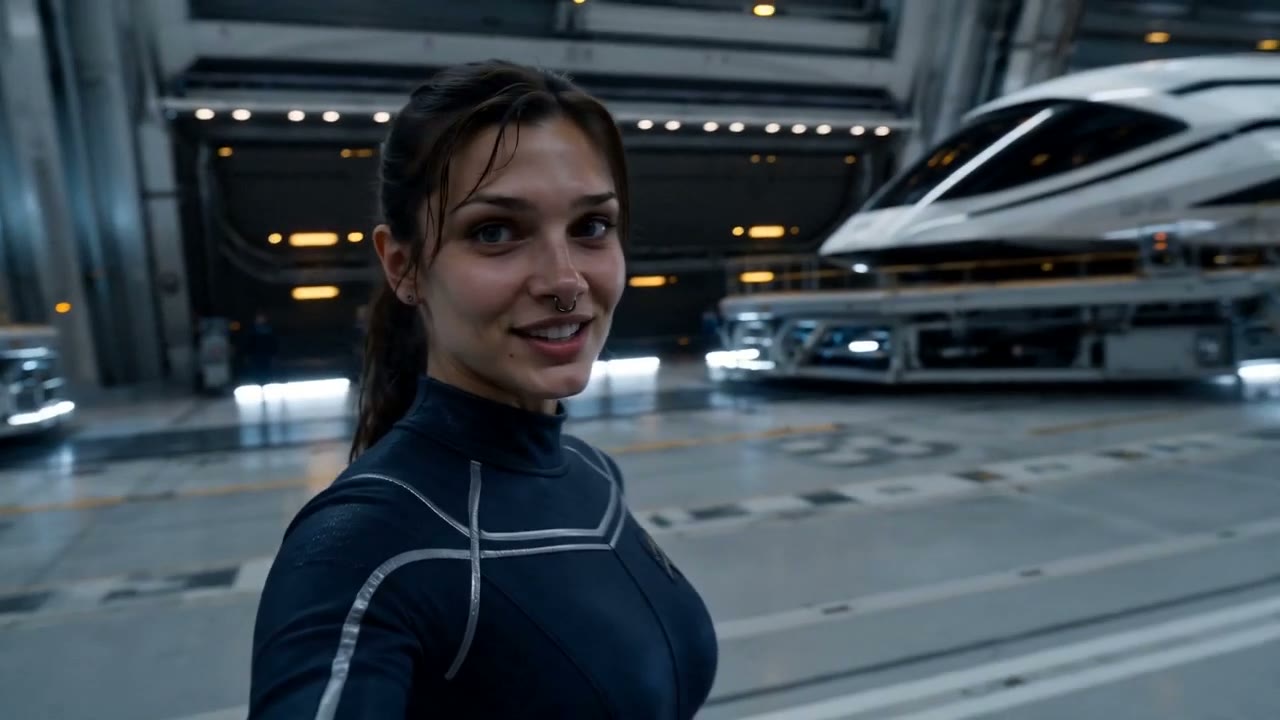
Music and sound effects, added after the cut — underscore first, then effects.
Every clip upscaled 4× in Topaz Video AI before the episode.